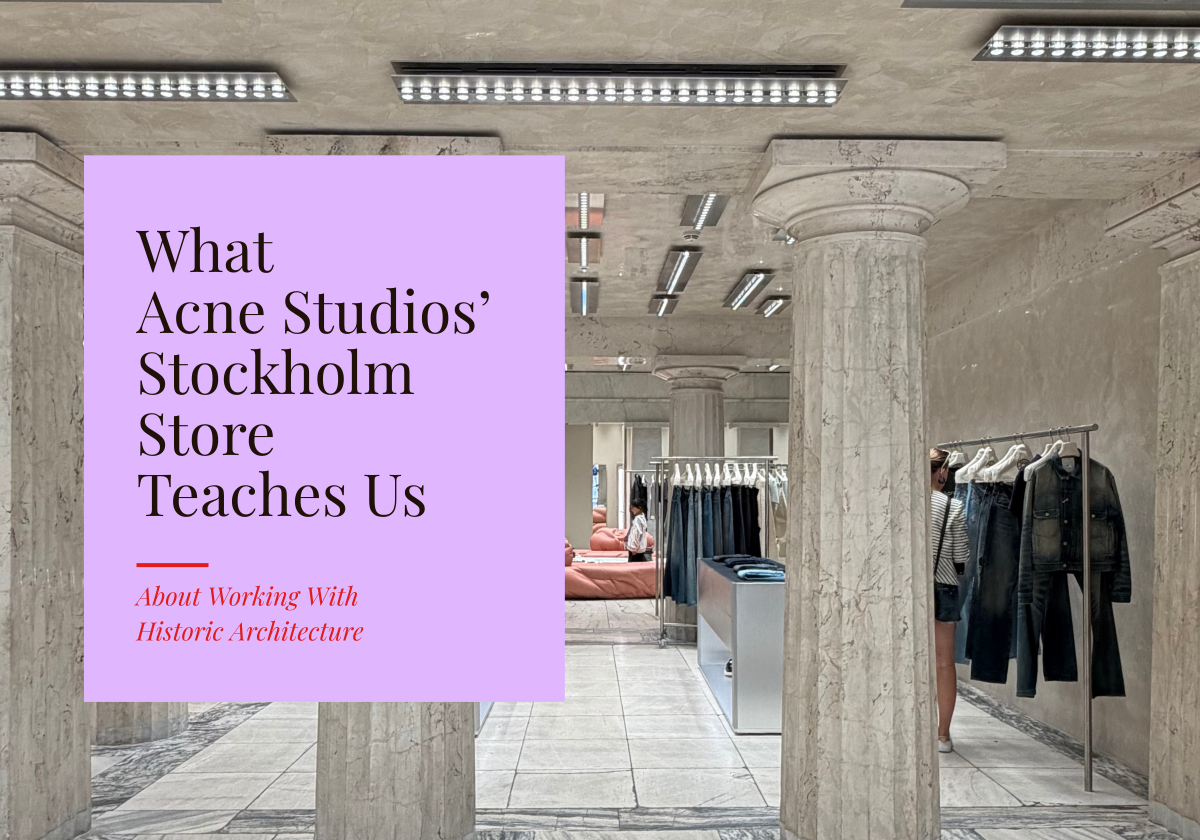
Most retail design is built for the first visit, but the stores that last are designed for the second.
The forgettable store is rarely the one that did something wrong. More often, it is the one that never decided what it wanted to be remembered for.
Ask someone to describe a shop they still think about months later and they rarely begin with the product. They talk about a feeling. The quality of light. The atmosphere.
Ask them about a shop they visited last week and can barely remember, and the answer is often a shrug. They were there. They left. Nothing stayed with them.
Good design is not always memorable design. The difference matters more than many retailers realise.
Most Retail Briefs Focus on the First Visit
Many retail briefs begin with practical questions.
What should customers see when they walk in? How should they move through the space? Where should key products sit? How do they find the till?
These questions matter. But they are all focused on a single moment: the first visit.
What is discussed less often is what happens afterwards.
The most successful independent retailers are not built on one visit. They are built on return visits. And return visits depend on something harder to measure than footfall or conversion rates. They depend on whether the space leaves a lasting impression.
In our view, that impression is rarely created by adding more. It is usually created by committing more strongly to less.
A space can be perfectly competent and still fail to become memorable, because competence and memorability are answering different questions.
What Makes a Space Memorable
People do not remember every detail of a room. They remember how it felt to be there.
That feeling is often created through a handful of decisions carried through with conviction.
Scale is one of them. A change in ceiling height, a compressed entrance, or a room that unexpectedly opens up can create a physical response before a customer has consciously noticed what happened. The body often registers proportion before the mind does.
Contrast matters too. Retail interiors are often designed to feel cohesive, but memorable spaces usually contain some degree of tension. A rough surface against something refined. A darker corner within a bright room. A material that feels slightly unexpected in the context. The eye notices contrast before it notices harmony.
Light may be the most powerful tool of all. Many retail environments are lit for consistency. Memorable spaces are often lit for atmosphere. They change throughout the day and reveal different qualities in the morning and evening. They give customers more than one memory of the same place.
And then there is sequencing. One of the most overlooked aspects of retail design is the order in which a space reveals itself. When everything is visible from the doorway, there is little left to discover. Spaces that hold something back create curiosity. They encourage exploration. They reward a second visit differently from the first.
Designing for Memory
Designing for memory does not mean making a space louder, busier, or more dramatic. It means deciding what the space stands for and having the discipline to protect that idea throughout the project.
A store built around atmosphere does not need endless visual gestures competing for attention. likewise a store built around material contrast does not need every surface to be interesting. A store built around light can often afford to be quieter everywhere else.
The retail spaces that stay with us are rarely the ones that tried to do everything. They are usually the ones that committed fully to one idea and followed it through consistently, the same principle behind why the best retail spaces don’t match. Coherence is not about everything matching. It is about everything meaning something.
A memorable store is rarely the loudest. It is usually the clearest about what it wants to be remembered for.
Kando Studio designs boutique retail interiors that create atmosphere, curiosity and reasons to return.
Written by Fariba Soltani, Founder of Kando Studio — kandostudio.com