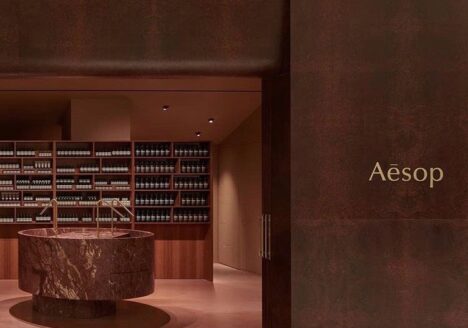
Walk into a small independent bookshop, a neighbourhood wine merchant or a fine jewellery boutique and one thing becomes clear almost immediately: none of them apologises for its size. In fact, much of their appeal comes from it.
The room feels edited rather than expansive. Every shelf appears intentional. Every object seems to have earned its place. The experience is intimate, not constrained.
Yet many retail briefs begin with a different assumption. The question is rarely, “How can this shop make the most of its size?” It is usually, “How can we make it feel bigger?” That assumption deserves questioning.
The Problem Isn’t Size. It’s Uncertainty.
Customers understand the size of a room long before they understand the shop. Within a few seconds they know where the walls are, how far they can see and roughly how much there is to explore.
That recognition happens before they’ve looked at a single product. It shapes whether they feel comfortable looking more closely or simply continue walking.
When a shop tries to obscure that recognition, when the edges of the room aren’t quite legible, customers rarely experience the space as larger. They experience it as harder to read. A room that’s harder to read is rarely a room people linger in.
The first few seconds inside a shop rarely determine what a customer buys. They often determine whether they continue looking.
A shop that accepts its proportions often feels more generous than one trying to disguise them. Generosity, in a small shop, has very little to do with floor area it comes from the sense that every metre was considered, not apologised for.
Generosity and size are not the same thing.
Compression Focuses Attention
Walk into a small perfumery and you’re often within arm’s reach of the first display before you’ve consciously slowed down. That closeness isn’t a compromise. It’s part of the experience. The customer doesn’t need to search for the products. The room has already brought them into conversation with them.
Small spaces possess something larger ones often struggle to achieve naturally: concentration.
There are fewer competing views.
Fewer competing displays.
Fewer decisions.
That isn’t a deficiency to manage. It’s a tool most larger interiors would have to work hard to recreate. A customer notices the grain of a timber counter because it sits within arm’s reach. A carefully lit object becomes a destination rather than one display among dozens. The transition from browsing to considering happens over a few deliberate steps rather than across a long journey. A customer who has properly noticed three products is often more engaged than one who has glanced past thirty.
Compression does not restrict attention. It directs it.
The Temptation to Disguise Scale
This is why attempts to make a small shop appear larger sometimes have the opposite effect. Mirrors, uninterrupted pale finishes and long, open sightlines are not inherently poor design decisions. Used with purpose, they can be highly effective.
The difficulty begins when they exist only to disguise the room’s true proportions. A mirrored fitting area meant to “extend” a narrow room often produces the opposite effect. Customers pause a beat longer at the threshold, working out which reflection is real, before deciding whether to continue inside.
Customers rarely leave believing the shop was larger than it really was. More often, they leave remembering very little about it at all. When every surface is trying to dissolve into the next, the room loses the points of contrast that help people orient themselves, slow down and remember where they have been. Nothing asks to be noticed, so nothing is. The space feels less edited. Less confident.
So What Should It Feel Like Instead?
If a small shop shouldn’t try to feel bigger, the more useful question is what it should try to feel like.
Edited. Nothing feels left over.
Confident. The room never apologises for its size.
Intimate. Customers are close enough to notice details without feeling crowded.
Calm. Attention is never asked to go in two directions at once.
Deliberate. Every decision still makes sense up close.
None of these qualities require additional square metres. Most of them are easier to achieve without them.
Small Shops Have an Advantage
Some of the world’s most memorable boutiques occupy remarkably modest footprints. Their value does not come from generosity of floor area. It comes from clarity of intention.
Every threshold matters. Every display matters. Every material decision carries more weight. This is what the qualities above actually look like in practice. A jewellery counter positioned so a customer’s hand naturally rests beside the case. A single bench by the window rather than three scattered seating areas. A shelf left empty on purpose, because filling it would have meant including something that didn’t deserve to be there. None of these decisions need scale. They need attention.
A small shop rarely succeeds by pretending to be a large one. It succeeds by becoming an exceptionally well-considered small one.
Confidence is often more memorable than scale.
If you’re planning a boutique retail project and want to think beyond square metres and material palettes, we’d be happy to have a conversation.
Explore our retail interior design work or get in touch to discuss your project.
Written by Fariba Soltani, Founder of Kando Studio — kandostudio.com