Some shops could move into another building tomorrow and very little would change.
Acne Studios in Stockholm isn’t one of them.
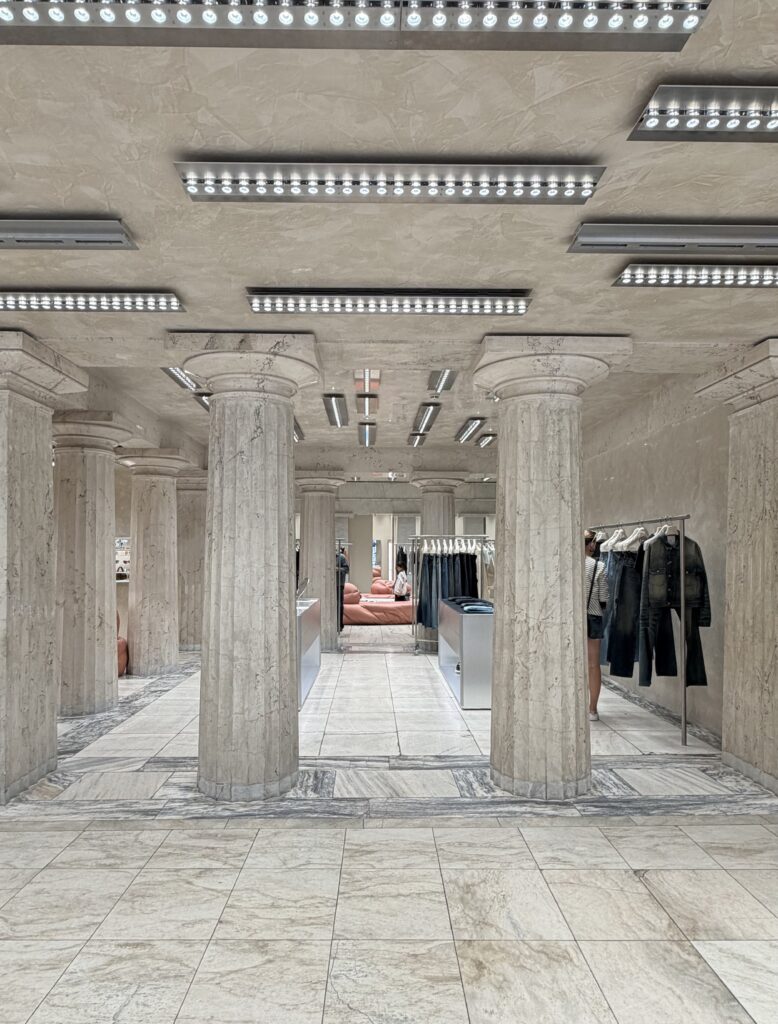
Its flagship occupies the former Kreditbanken headquarters on Norrmalmstorg, an imposing early 20th-century bank building with marble floors, huge classical columns and the kind of proportions that immediately make you aware of the architecture.
And Acne hasn’t tried to make any of that disappear.
The old building is allowed to stay old
This is what struck me most when I visited.
The original architecture still has a very strong presence. The columns remain. The scale remains. You can still read the building as something that existed long before Acne arrived.
Rather than covering that history with a completely new retail identity, the store works around it.
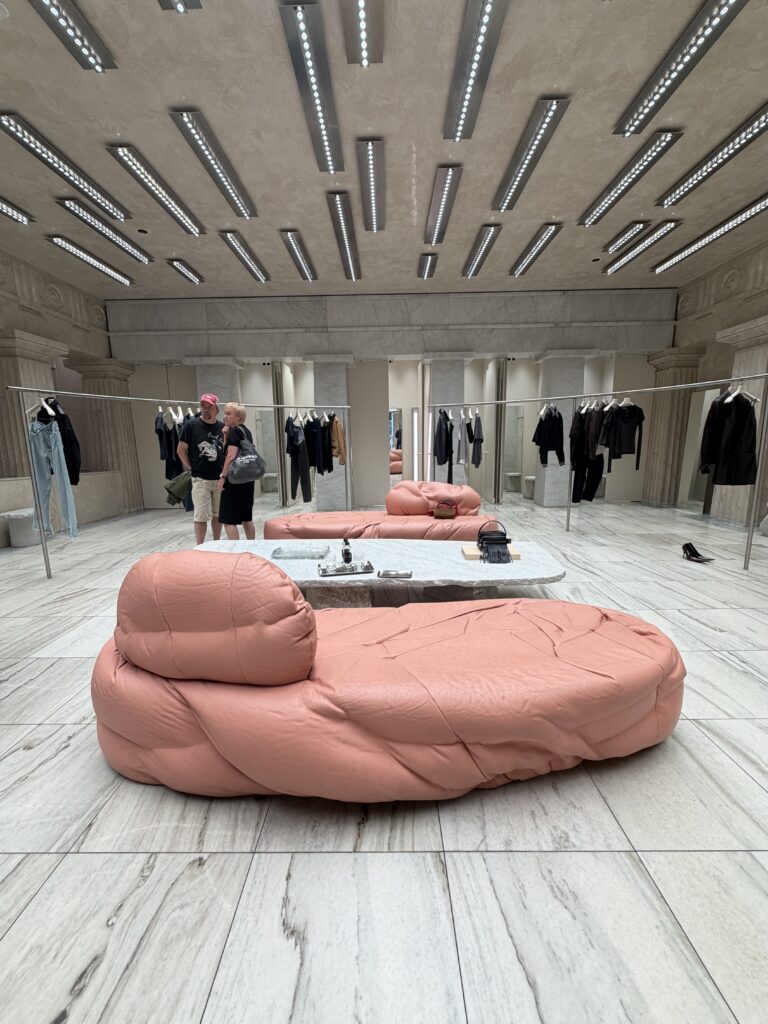
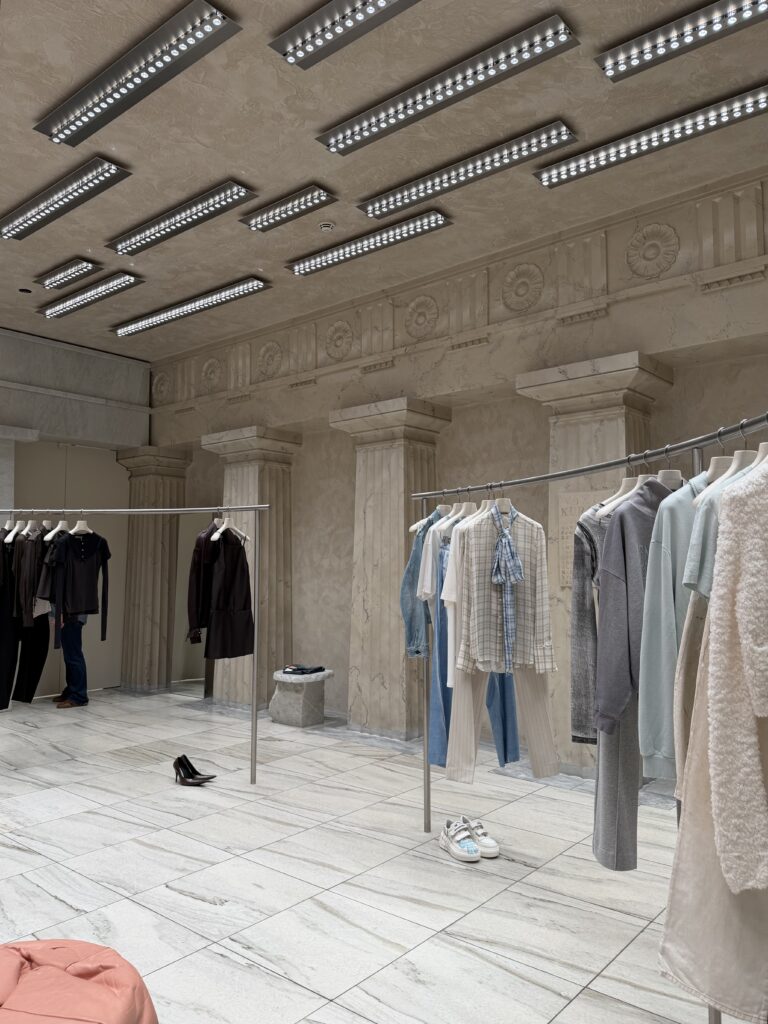
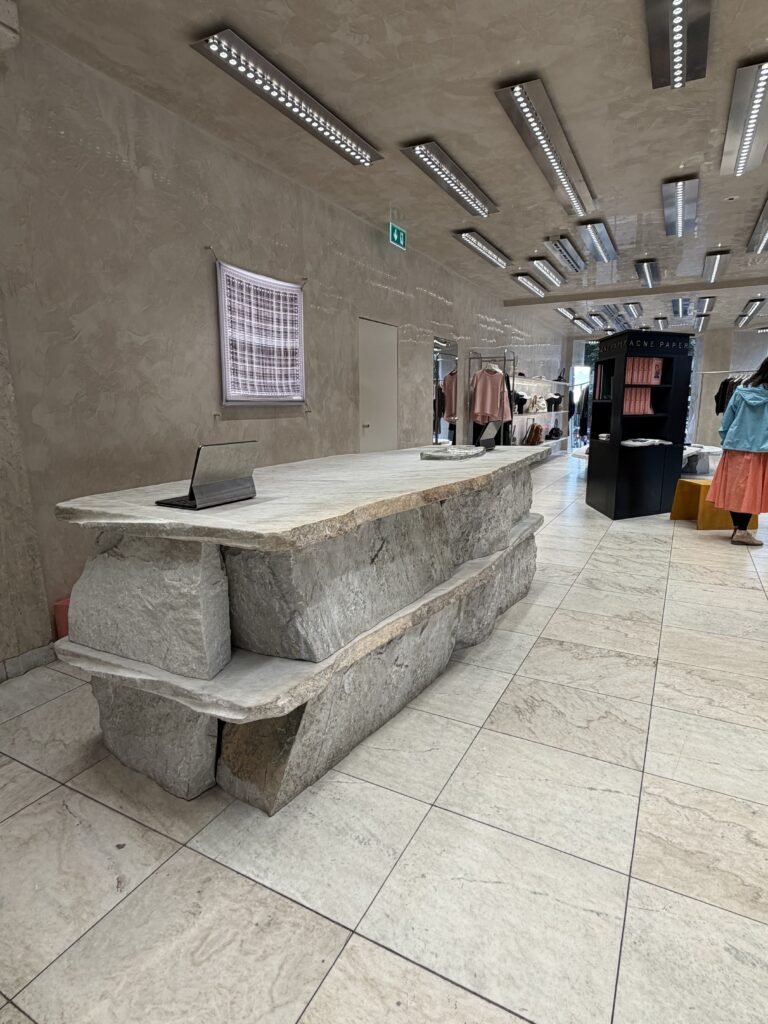
Acne Studios originally worked with Stockholm-based Halleroed on the transformation, introducing contemporary elements that sit almost independently within the historic shell: stainless steel, sculptural furniture, lighting and carefully placed displays.
The contrast is what makes it work. Heavy stone against polished metal. Classical architecture against contemporary furniture. Grandeur against something slightly strange. Nothing is trying particularly hard to match. And perhaps that is precisely why it feels so coherent.
Then there is the story
While I was looking around, a member of staff mentioned that the building had once been a bank. That led to something I hadn’t expected. This was the site of the 1973 Norrmalmstorg robbery, the hostage situation that later became associated with the term Stockholm Syndrome, after some of the hostages appeared to develop sympathy towards their captors.
Suddenly the building became even more interesting. You are not simply standing inside a beautifully designed fashion store. You are standing inside a place with another life entirely, one that has nothing to do with clothes, branding or retail.
And Acne hasn’t erased that history.
Retail doesn’t always need a blank canvas
There is a temptation in retail design to make every space unmistakably belong to the brand. The same palette. The same materials. The same visual language repeated from one location to another. But sometimes the more interesting approach is to do less. Let the building contribute something the brand couldn’t manufacture itself.
At Acne Studios Stockholm, the architecture brings history and permanence. The contemporary interventions bring tension and character. Neither needs to overpower the other. It is a useful reminder that a strong retail identity doesn’t necessarily come from controlling every surface. Sometimes the building should be allowed into the conversation.
Working with an existing building often starts with understanding what is already worth keeping.
If you’re planning a retail project and want to explore how the architecture, brand and customer experience can work together, we’d be happy to have a conversation. Explore our retail interior design work or get in touch to discuss your project.