The question almost everyone asks — and the one that rarely gets an honest answer.
There is a particular silence that follows the question “how much does an interior designer cost in London?” A pause, a careful inhale, then an answer that begins with “it depends.” And while it does depend — on scope, on complexity, on the building itself — the persistent lack of clarity around fees is one of the main reasons people hesitate to hire a designer at all. Not because the cost is too high, but because they cannot plan around an unknown.
This is an attempt to change that. To speak plainly about how interior designers in London structure their fees, what those fees actually cover, and how to know whether the investment makes sense for your project.
How Interior Designers in London Structure Their Fees
There is no single standard, and that is the first thing worth understanding. Different designers use different models — and sometimes a combination of several. What follows are the three most common approaches.
Fixed Fee Based on Scope — The Clearest Model
Many London design practices now work on a fixed-fee basis, where the cost is determined by the scope and complexity of the work rather than the client’s budget or hours worked. This is becoming the preferred model because it offers complete clarity to both parties.
A fixed fee might look like this:
- Bathroom design (concept, technical drawings, material specification, 3 site visits): from £6,000
- Full flat renovation (85sqm, including kitchen, bathroom, living spaces, bespoke joinery, full project management): £35,000-£45,000
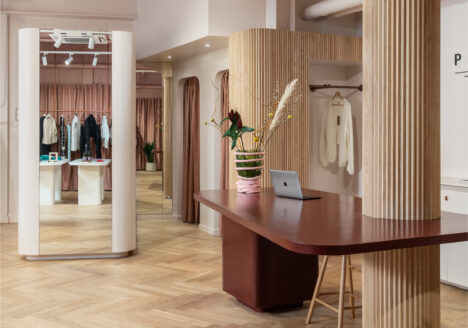
- Boutique retail fit-out (150sqm, concept through to completion, technical drawings, joinery specifications, contractor liaison): £35,000-£40,000
The fee is based on what you are asking the designer to do, not what you plan to spend with contractors. This removes ambiguity and allows both designer and client to proceed with confidence.
Percentage of Budget — A Guide, Not a Variable
Some designers still reference the client’s budget when determining their fee — typically working within a range of 12 to 25 per cent depending on the level of involvement. However, what matters is this: the percentage is used to calculate the fee at the start, and the fee is then fixed. It does not fluctuate based on what the client eventually spends.
For example, if a client states their budget is £200,000 and the designer quotes 22 per cent, the fee is £44,000. That fee remains £44,000 whether the client ends up spending £180,000 or £220,000. The designer is compensated for the work required to deliver the project at that level of ambition — not for the client’s final expenditure.
This is an important distinction. The budget informs the scope and complexity, but the fee itself is agreed upfront and does not change simply because the client chose less expensive tiles or reduced the joinery package during the build.
Hourly or Day Rates
For smaller engagements — a colour consultation, a styling session, advice on a single room — some designers charge by the hour. In London, experienced interior designers typically charge between £100 and £250 per hour depending on their practice and specialism. This works well for discrete, defined tasks but becomes harder to manage on larger, more open-ended projects.
This is where misunderstandings often arise. Clients compare fees without comparing what those fees include — and the difference can be significant.
An interior designer in London is not simply choosing fabric swatches or sourcing furniture. The work includes:
- Spatial planning that considers how you actually live, not how a room photographs
- Technical drawings and specifications that contractors can build from accurately
- Material and finish specification with access to trade suppliers and knowledge of how materials perform over time
- Coordination with contractors, structural engineers, and other consultants to ensure the design is built as intended
- Problem-solving when things inevitably go wrong on site — and protecting you from the expensive mistakes that come from inexperience
The cost of getting spatial decisions wrong — a bathroom retiled because the proportions felt off, joinery replaced because it warped within two years, a kitchen reconfigured because the flow did not work in practice — routinely exceeds the designer’s fee several times over.
What You Are Actually Paying For
(and why it matters)
Good design is not decoration. It is the systematic prevention of regret.
Why the Cheapest Fee Is Rarely the Best Value
The assumption that a lower fee means a more affordable project is one of the most persistent misconceptions in renovation. A designer charging 10 per cent but requiring three times as many hours, generating scope creep through unclear process, or specifying materials that need replacing within five years is not cheaper. They are simply less transparent.
The designers who charge properly and work efficiently save their clients money. Not by cutting corners, but by making considered decisions the first time, managing contractors with authority, and understanding that a well-resolved interior requires nothing to be redone.
There is also the question of what a thoughtful, functional interior does to the value and liveability of a London home. In Richmond, Kew, Barnes and Chiswick — where properties regularly transact above £1 million — a considered interior is not a luxury. It is the difference between a house and a home that holds its character across decades.
To make this concrete, here is what design fees in London typically look like across different project scales:
Single Bathroom Renovation
Project budget: £40,000–£80,000. Typical design fee: £6,000–£12,000 depending on scope and complexity.
Full Flat or Apartment Renovation
Project budget: £100,000–£200,000. Typical design fee: £20,000–£45,000. This would include full spatial planning, technical drawings, specifications, material sourcing, contractor coordination and regular site visits.
Boutique Retail Fit-Out
Project budget: £100,000–£150,000. Typical design fee: £20,000–£35,000.
For larger retail projects (£200,000–£250,000 budgets), fees typically range from £40,000–£60,000. Commercial fit-outs require detailed technical drawings for joinery and fixtures, comprehensive lighting design, brand integration, and intensive contractor coordination during the compressed 6–8 week build period.
These are not arbitrary numbers. They reflect the hours required, the level of coordination involved, and the responsibility carried across what is often six to twelve months of work.
What Different Projects Actually Cost
Before You Hire -What to Ask
A few questions worth raising in any initial conversation:
- What exactly does your fee include? (Site visits, procurement, contractor coordination — or just drawings?)
- Is the fee fixed, or does it change based on my final spend?
- How do you structure payment stages?
- How many revision rounds are included?
- Have you worked on this type of property before, and can I speak with a past client?
These questions do not guarantee a good outcome, but they reveal clarity of process. And clarity of process is usually a reliable indicator of the quality of work that follows.
nterior design in London is not cheap. Neither is the alternative — a renovation driven by indecision, unresolved spatial problems, and the accumulated cost of choices made without coherence. The homes that feel considered, that seem to have always been that way, are rarely the result of good luck. They are the result of someone thinking carefully, long before the first contractor arrived.
What you are paying for is not decoration. It is the confidence of knowing the space was resolved properly the first time — and the pleasure of living in a home that feels like yours.
What Interior Design Actually Costs
Kando Studio works with residential and retail clients across West London. If you are considering a renovation or fit-out and would like to understand what design involvement would look like for your project, we would welcome a conversation.